Photography note
Travel Photo Essay Structure: How to Sequence a Story That Flows
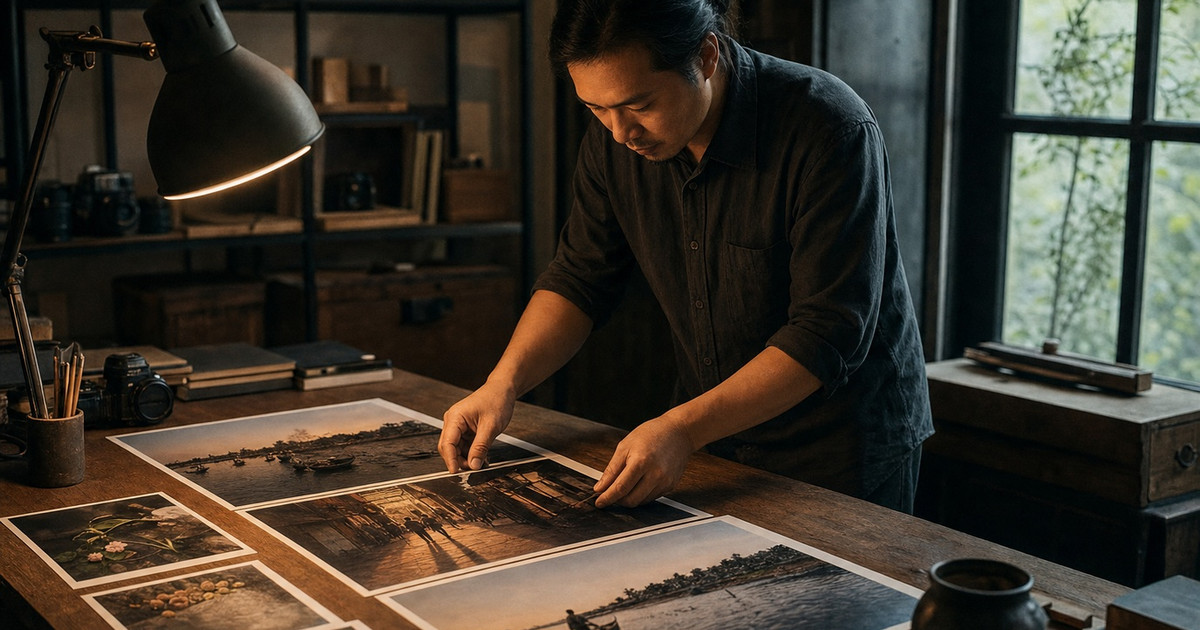
A practical travel photo essay structure for choosing an angle, mixing shot roles, sequencing images, writing captions, and editing a quiet web story.
Data accurate as of July 2026 based on market research
Contents
Introduction
Start with a question, not a place
Plan image roles before you shoot
Edit for the story
Sequence for pace and meaning
Add only the text the pictures need
Keep travel storytelling accurate and respectful
Photo essay, gallery, or travel diary
Common misconceptions
FAQ
Conclusion
Truth Box
| Key Point | Insight |
|---|---|
| A place is too broad | Give the sequence a narrower question, ritual, route, mood, or change to follow |
| Image roles create range | Establishing frames, people, action, details, pauses, and a closer give the edit useful options |
| Strong singles can weaken a set | Keep a photograph only when it adds information, pace, contrast, or emotion |
| Sequence changes meaning | Order images by visual and narrative logic, not by capture time |
| There is no universal image count | Current guides suggest different ranges, so use the shortest edit that completes the story |
Introduction
A travel photo essay needs a specific idea and a deliberate mix of place, people, action, detail, and pause. The order should feel clear even when the photographs were made out of sequence.
Editing is the hard part. Travel folders contain attractive frames that repeat information. Keep fewer photographs with clearer jobs. Ask what each one contributes beside the next.
Start with a question, not a place
Professional Photographers of America, World Nomads, and MapHappy repeat the editorial rule that a location is not a story. “Hoi An” names a place. A workable angle might follow morning deliveries, lantern reflections after rain, one riverside trade, or changing shopfront light.
Before shooting, write one plain sentence:
This essay follows morning deliveries from quiet setup to opening hour.
If that sentence stays vague, research the place and talk to people. Picfair recommends checking coverage, access, and restrictions before building a shot list.
Plan image roles before you shoot
A shot list should create range while leaving room for unplanned moments.
| Image role | What it contributes | Travel example |
|---|---|---|
| Opener | Curiosity and tone | A figure entering a wet street |
| Establishing frame | Place and scale | A wide river or street view |
| Environmental portrait | Person and setting | A vendor at a working stall |
| Action frame | Movement | Goods packed or a boat arriving |
| Detail | Evidence and texture | Worn tools or rain on tile |
| Pause | Space between dense moments | An empty chair or still water |
| Closing frame | Resolution or release | A street after the activity passes |
Adjust these roles to the subject. A landscape may need no portrait. A craft story may rely on hands and tools.
Edit for the story
Remove technical failures, duplicates, and misleading frames. Then compare photographs with similar jobs.
A useful three-pass edit looks like this:
| Pass | Question |
|---|---|
| Clarity | Is the subject, action, and place clear? |
| Contribution | Does the frame add something new? |
| Relationship | Does it help the frames around it? |
Blurb distinguishes between choosing the best photographs and choosing those that serve the story. Picfair warns against padding an essay with repetitive images. No reliable universal image count exists. Stop when the story feels complete and every frame has a job.
The Nguyen LNP Photography gallery shows these roles. “Da Nang Afterglow” establishes atmosphere. “Wing and Droplet” works as detail. “Thin Moon” creates a visual pause. They are separate portfolio frames, but they show why scale and energy matter.
Sequence for pace and meaning
Travel essays rarely need to follow capture time. Professional Photographers of America compares sequencing to assembling a film. An edit can move between wide and close, busy and still.
Ask which photograph draws someone in and which one explains the place. One image can do both. A mysterious opener may need a clear establishing frame after it.
Avoid stacking the same distance, color, or gesture unless repetition is the point. A curved boat edge can lead into an arched doorway. A crowded frame may need a quiet image after it.
Use prints or thumbnails to test relationships. Move them, remove one, and reverse two. If the story still reads, leave the removed frame out.
A closer can resolve the action, return to the opening idea, or leave a precise question. It should not feel like the final file in the camera roll.
Add only the text the pictures need
A short introduction should explain the subject, place, timeframe, and reason for the essay. Captions should add facts that are not visible, such as a name, date, relationship, or action.
The online LIFE archive of W. Eugene Smith's “Country Doctor” shows this balance. Its captions identify people and actions while the sequence carries the emotional weight.
For a web essay, use a clear title, natural alt text, and captions where context matters. The guide to image SEO for photography portfolio pages covers crawlable markup and discovery without turning the page into keyword copy.
Keep travel storytelling accurate and respectful
Sequencing can create a false implication when unrelated moments are placed together carelessly.
The National Press Photographers Association asks visual journalists to represent subjects accurately, provide context, avoid stereotypes, treat people with dignity, and preserve image integrity. Those principles also help with non-news travel work.
Record names and places. Confirm spellings. Ask before entering private spaces. Be clear when a portrait is arranged. Do not claim more than the photograph and notes support. Disclose mixed dates or locations when they affect interpretation.
Photo essay, gallery, or travel diary
| Format | Best use | Main test |
|---|---|---|
| Photo essay | One focused experience | Does the order create meaning? |
| Gallery | A broad selection | Can viewers browse without a narrative? |
| Travel diary | A chronological record | Does the timeline matter most? |
| Image detail page | One frame with context | Does the page explain the photograph? |
A gallery can hold many subjects. A photo essay makes a narrower promise. Choose the format before forcing photographs into a story they do not contain.
Common Misconceptions
| Myth | Correction |
|---|---|
| A travel photo essay must cover a famous destination | Familiar streets, routines, and small local changes can support a stronger angle |
| The best photographs always belong in the final edit | A strong single should be removed when it repeats information or breaks the sequence |
| Every essay needs the same shot list and image count | Image roles and length should follow the subject, access, and publishing format |
FAQ
What is a travel photo essay?
It is a deliberate sequence of travel photographs exploring one focused subject, experience, question, or change.
How should a travel photo essay begin?
Use an interesting opener, then orient the viewer. One clear photograph can do both jobs.
How many photos should a travel photo essay have?
There is no universal number. Use the shortest sequence that gives context, variation, and a satisfying close.
Should a travel photo essay follow chronological order?
Only when time is central. Many travel essays work better when ordered by information, rhythm, and emotional pace.
What makes photo essay captions useful?
Useful captions add names, locations, dates, relationships, or actions. They should not invent motives or repeat the obvious.
Sources and Further Reading
Professional Photographers of America, “Master the Photo Essay”
World Nomads, “How to Build a Photo Essay Into a Great Travel Story”
Routledge and Taylor & Francis, “Building Blocks of the Travel Photo Essay”
Picfair Focus, “How to Create a Photo Essay”
National Press Photographers Association Code of Ethics
LIFE, W. Eugene Smith's “Country Doctor”
Conclusion
Give every frame a role. Start with a narrow question, shoot enough range, remove repetition, and sequence by meaning and pace. Add factual captions where needed. Check that the final order treats people and places fairly.
Browse the Nguyen LNP Photography archive for quiet frames. For portfolio curation or a lightweight photography website, contact [email protected].
Need help applying this?
See the related service page: Nguyen LNP photography portfolio or email [email protected].