Photography note
How to Curate a Travel Photography Portfolio
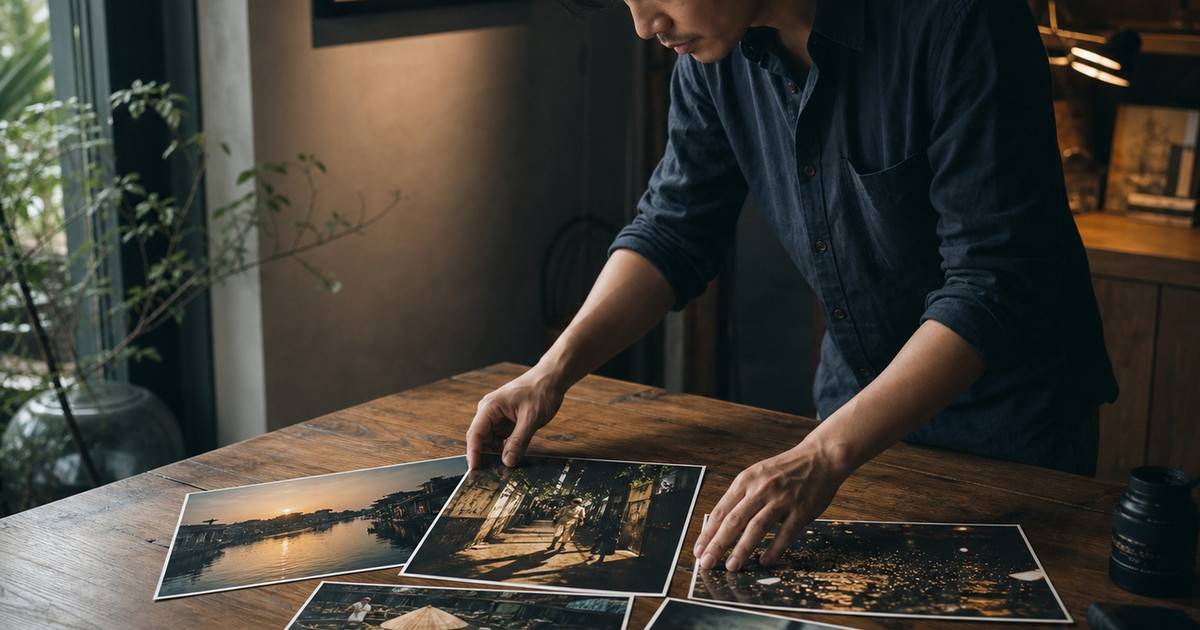
Curate a travel photography portfolio with a clear purpose, stronger image roles, tighter sequencing, useful context, and practical web checks.
Data accurate as of August 2026 based on market research
Contents
Introduction
Choose the job before choosing the photographs
Build a longlist with useful image roles
Cut repetition before polishing the sequence
Sequence the portfolio for a clear reading
Add context without crowding the photographs
Prepare the portfolio for the web
Portfolio, photo essay, or archive
Portfolio publishing context
Common misconceptions
FAQ
Conclusion
Truth Box
| Key Point | Insight |
|---|---|
| Purpose controls the edit | A client portfolio, exhibition submission, travel essay, and personal archive need different selections |
| Strong photographs still need roles | Each frame should add subject, place, action, detail, atmosphere, or closure |
| Repetition weakens the set | Keep the strongest version unless repetition creates a deliberate rhythm |
| Order changes the reading | The first, middle, and final frames should create a clear path through the work |
| There is no reliable universal image count | Use the brief when one exists, or the shortest edit that proves the intended range and story |
Introduction
A travel photography portfolio should show what you notice, how you edit, and what kind of work you want to make next. Current guides advise photographers to define an audience, select relevant work, arrange it carefully, and make contact easy.[4][5][9] The harder task is giving varied travel subjects enough range without making the edit feel scattered.
Choose the job before choosing the photographs
Write one sentence describing what the portfolio must do. Format and Amateur Photographer recommend defining the audience, goal, and portfolio type before selecting the final work.[5][7]
A practical brief might read:
Show an editor that I can build a calm, accurate visual story about daily life in Vietnam.
Use that sentence as a filter. Digital Photography School distinguishes work made for an editor, exhibition, book, stock library, tour, or personal audience.[8] Keep a master archive, then make focused edits from it instead of forcing one gallery to serve every purpose.
Build a longlist with useful image roles
Start wider than the final edit. Mark technically sound photographs that support the brief, then tag each by its job.
| Image role | What it proves | Travel example |
|---|---|---|
| Opener | Tone and curiosity | A lone figure entering a rain-dark street |
| Establishing frame | Place and scale | A river, neighborhood, or market before activity peaks |
| Human frame | Relationship and presence | A person working within the surrounding space |
| Action frame | Change or movement | Goods arriving, food being prepared, or a boat turning |
| Detail | Specific evidence | Worn tools, wet tile, fabric, hands, or reflected light |
| Pause | Visual breathing room | Still water, an empty chair, or a quiet wall |
| Closer | Resolution or release | The same place after the activity has passed |
These roles are prompts, not a fixed shot list. The travel photo essay structure guide shows how to adapt them to a longer story.
Cut repetition before polishing the sequence
Compare similar frames side by side. Keep the clearest contribution, not the strongest memory. Legendary Photos, Shotkit, and Amateur Photographer warn against repetition and recommend deliberate selection or feedback.[1][3][7]
| Pass | Question | Action |
|---|---|---|
| Relevance | Does this photograph support the brief? | Remove work that belongs in another portfolio |
| Contribution | Does it add information, mood, scale, or movement? | Remove duplicates and near-duplicates |
| Relationship | Does it help the photographs beside it? | Keep, move, or replace it after sequencing |
Competitions publish exact submission limits, while online guides recommend different ranges.[3][7] No reliable universal image count exists. Follow the brief, or use the shortest edit that proves the intended range.
Ask another photographer or editor to review the set without the backstory. Confusion can reveal a missing frame, weak transition, or photograph that depends on your memory.
Sequence the portfolio for a clear reading
Use a strong opener, but do not mistake impact for clarity. Portfolio advice recommends careful ordering, narrative, and a memorable close.[1][3][7] Test these transitions:
| From | To | Why it works |
|---|---|---|
| Wide | Close | Moves from place to evidence |
| Busy | Still | Resets the pace |
| Warm light | Cool light | Signals time or mood change |
| Gesture | Matching shape | Creates a visual link without repeating the subject |
| Arrival | Departure | Gives the set a simple arc |
Move thumbnails or small prints. Remove one frame and read the sequence again. Keep it out if the portfolio becomes clearer.
Add context without crowding the photographs
A portfolio needs enough context to be understood, not a paragraph under every image. StyleCloud, Wix, and ShootProof connect presentation with relevant work, consistency, updates, and a clear contact path.[2][4][6]
| Page element | Useful content |
|---|---|
| Title | Subject, place, or editorial angle |
| Short introduction | What the set follows and where it was made |
| Captions | Names, locations, dates, or actions that are not obvious |
| About link | Who made the work and what they photograph |
| Contact path | A visible next step for editorial, web, print, or collaboration enquiries |
The National Press Photographers Association asks visual journalists to represent subjects accurately, provide context, avoid stereotypes, treat people with dignity, and preserve image integrity.[12] Confirm names and locations. Do not imply that unrelated moments happened together.
Prepare the portfolio for the web
Portfoliobox includes curation, navigation, image optimization, SEO, and maintenance in its checklist.[9] Google recommends crawlable HTML images, descriptive filenames and alt text, useful page titles, structured data, and image sitemaps where helpful.[10] W3C guidance says informative photographs need brief text alternatives, while decorative images may use empty alt text.[11]
Use this Nguyen LNP release check:
| Check | Pass condition |
|---|---|
| First image | Loads without lazy loading and has explicit dimensions |
| Other images | Use sensible dimensions, compression, and lazy loading below the fold |
| Alt text | Describes the visible subject and context without keyword stuffing |
| Captions | Add facts or story context instead of repeating the alt text |
| Mobile view | Preserves crop, order, navigation, and readable text |
| Discovery | Page title, description, internal links, sitemap, and representative image agree |
| Contact | Email or enquiry route works from the live page |
The image SEO guide for photography portfolios covers the technical layer. The Nguyen LNP Photography gallery shows the current work.
Portfolio, photo essay, or archive
| Format | Best use | Main editing rule |
|---|---|---|
| Focused portfolio | Prove fit for an audience or opportunity | Select only work that supports the brief |
| Photo essay | Tell one visual story | Sequence for information, pace, and meaning |
| Gallery | Let visitors browse a broader body of work | Group clearly and avoid unnecessary repetition |
| Archive | Preserve completed work and metadata | Keep it searchable without treating every frame as a showcase image |
A photographer may need all four. The mistake is presenting the archive as the portfolio.
Portfolio publishing context
A useful portfolio aligns the edit, mobile presentation, image metadata, and contact path with the same audience.[2][4][5]
Common Misconceptions
| Myth | Correction |
|---|---|
| The portfolio should contain every strong photograph | Strong work belongs only when it supports this portfolio's purpose |
| A consistent portfolio needs every image to look the same | Consistency comes from intent and editing, while useful variation creates pace |
| Publishing the gallery finishes the job | The live page still needs mobile, image, metadata, internal link, and contact checks |
FAQ
How do I choose photos for a travel photography portfolio?
Define the audience and purpose first. Build a longlist, assign image roles, then remove photographs that repeat information or pull the set away from the brief.
How many photos should a travel photography portfolio include?
There is no reliable universal number. Follow the submission brief when one exists. Otherwise, use the shortest set that proves range and tells the intended story.
Should I mix different countries in one portfolio?
Yes, when the selection shares a clear audience, subject, or visual approach. Use separate portfolios when the work serves different clients or stories.
What should come first in a photography portfolio?
Choose an opener that creates interest and supports the portfolio's purpose. Follow it with enough context for the viewer to understand the work.
How often should I update my photography portfolio?
Review it when your target work changes or stronger relevant work becomes available. Remove outdated or repetitive photographs instead of adding new work automatically.
Conclusion
Start with the job. Cut the longlist by relevance, contribution, and relationship. Sequence the remaining photographs through place, action, detail, and pause.
Browse the Nguyen LNP Photography gallery for current work. For portfolio curation or a lightweight photography website, contact [email protected].
Sources
[1] Photography Portfolio Tips for Stunning Results [2] How To Curate Your Photography Portfolio [3] How to Make a Photography Portfolio [4] How to Make a Photography Portfolio and Examples [5] Photography Portfolios 101 [6] How to Create a Photography Portfolio [7] How to Create a Successful Photography Portfolio [8] How to Build a Travel Photography Portfolio [9] Photography Portfolio Checklist [10] Google Image SEO Best Practices [11] W3C Alt Decision Tree [12] NPPA Code of Ethics for Visual Journalists
Need help applying this?
See the related service page: Nguyen LNP photography portfolio or email [email protected].