Photography note
Hoi An Street Photography Guide: Build a Quiet Visual Story
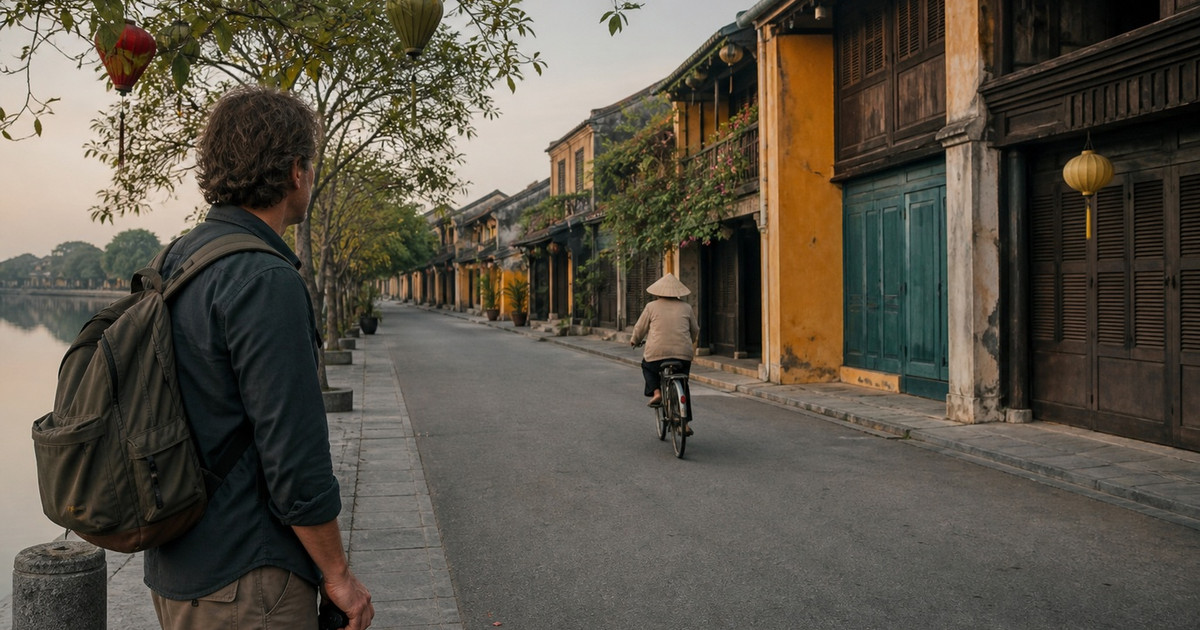
Use this Hoi An street photography guide to plan a respectful photo walk, photograph heritage context, build a sequence, and publish images clearly.
Data accurate as of August 2026 based on market research
Introduction
This Hoi An street photography guide starts with one story idea and a short, slow route. Photograph setting, people, gestures, and details, then edit the frames into an honest sequence.
Hoi An is a living heritage town, not an outdoor studio. UNESCO describes its Ancient Town as a well-preserved trading port shaped by local and foreign influences. Homes, shops, places of worship, streets, quays, and river links remain part of the town's character. That context should guide the photographs.
Contents
Truth Box
Read the town before photographing it
Build a route around light and access
Photograph people with consent and context
Create a story instead of a spot list
Use a field checklist
Compare three approaches
Publish the sequence responsibly
Current heritage and search context
Common misconceptions
FAQ
Conclusion
Sources
Truth Box
| Key point | Practical meaning |
|---|---|
| Choose a story before a route | A clear idea helps you decide what belongs in the frame and what does not. |
| Heritage is active, not decorative | Shops, homes, worship spaces, and river activity deserve context and patience. |
| Consent continues into publication | Consider how a recognizable person will be shown, captioned, and reused. |
| A sequence needs different image roles | Mix setting, action, portrait, detail, transition, and closing frames. |
| Web presentation affects meaning | Captions, order, alt text, and page context shape how viewers read the work. |
Read the town before photographing it
Begin with UNESCO's description rather than a list of popular backdrops. The Ancient Town developed as a trading port and retains a close relationship between narrow streets, timber buildings, commercial spaces, religious sites, quays, and the river.
Turn that into a one-sentence brief. For example:
Photograph how commerce, home life, and heritage share the same street.
That brief is more useful than trying to collect every landmark. It directs attention toward doorways opening, goods moving, people crossing from shade to light, old materials being repaired, and the river connecting one part of town to another.
The official Hoi An heritage site publishes visitor and ticket information. Check it before your walk. Access, pedestrian arrangements, events, and site rules can change. Follow signs and staff instructions at ticketed buildings and places of worship.
Build a route around light and access
Current Hoi An photography guides repeatedly recommend early starts, the Ancient Town, the market, the Japanese Covered Bridge, the river, and the lantern-lit evening. Those ideas are useful, but a route should serve your story rather than become a race between locations.
Use two short sessions if possible. Morning can cover streets opening, market movement, and façades. Later, cover the river and foot traffic. Revisit one location to create visual rhythm.
A phone or one camera with a familiar lens can be enough. Set exposure for the real light and movement. Check highlights, shutter speed, and focus after the first frames.
Photograph people with consent and context
Vietnam's Civil Code gives individuals rights over the use of their image. Article 32 states that use normally requires consent, with limited exceptions. It also addresses commercial use and remedies when image rights are violated. This article is not legal advice, but the practical publication rule is clear: be careful with recognizable people.
For a close portrait, ask. Explain the intended use when the image may appear online, in a portfolio, in a publication, or in commercial work. A person agreeing to one photograph has not automatically agreed to every later use.
For candid scenes, consider distance, vulnerability, and possible harm before publishing. Magnum Photos and World Press Photo stress dignity, privacy, accurate context, honest consent, and special care with children and vulnerable people. If someone objects, lower the camera and move on.
Create a story instead of a spot list
My preference is to assign each final frame a job. This keeps the edit from becoming a row of similar postcard views.
| Image role | What to look for in Hoi An |
|---|---|
| Opener | A frame that establishes pace, light, or place |
| Setting | Street plan, river edge, market, or building relationship |
| Human frame | A respectful gesture, task, crossing, or environmental portrait |
| Detail | Timber, tile, repair, tool, food, fabric, reflection, or worn surface |
| Transition | Doorway, alley, bridge, shadow, bicycle, or changing light |
| Closing frame | A quieter image that resolves the visual idea |
The strongest single photograph does not always make the strongest sequence. Remove repeated frames. Keep a technically modest image when it supplies information that the story would otherwise lose. The existing guides on travel photo essay structure and portfolio curation go deeper into editing and order.
Use a field checklist
| Stage | Check |
|---|---|
| Before | Write the story brief, check current visitor information, charge batteries, clear cards, and decide how you will handle consent. |
| During | Work slowly, vary image roles, respect signs and refusals, record names only with permission, and note where and when key frames were made. |
| Edit | Remove repetition, verify captions, disclose posed direction, and check whether any image could expose or misrepresent a person. |
| Publish | Use descriptive filenames and alt text, keep captions accurate, preserve aspect ratios, and test the sequence on mobile. |
Compare three approaches
| Approach | Strength | Main risk |
|---|---|---|
| Landmark checklist | Easy to plan and useful for a first visit | Repeated images that say little about the town |
| Unplanned street walk | Open to chance and small moments | Inconsistent coverage and weak final sequence |
| Story-led photo walk | Clear edit, better context, and purposeful return visits | Requires restraint when attractive frames do not fit |
Use a few known anchors, then let the story brief decide where you pause and what you leave out.
Publish the sequence responsibly
World Press Photo's caption guidance asks for accurate who, what, where, when, and why, plus disclosure when a photographer influenced or posed a scene. A travel portfolio does not need newsroom-length captions, but it should not turn guesses into facts.
Google recommends standard HTML image elements, descriptive filenames, useful alt text, and relevant page context. W3C guidance says the text alternative should convey the information or purpose that the image adds. Describe what matters in that specific page, not every visible object. The image SEO guide for photography portfolios covers this in more detail.
Before publishing, read the alt text in sequence and view the page on a phone. The story should still make sense, with crops that respect each frame.
Current heritage and search context
Live results focus on location lists, early-morning light, yellow façades, markets, lanterns, and camera settings. Réhahn's local guide also values repeated observation.
This guide covers the missing steps between arrival and publication: a story brief, access checks, image rights, captions, shot roles, and an accessible sequence.
Common misconceptions
Empty streets are always more authentic
An empty frame can show architecture clearly. It can also erase the people and work that make a street function. Choose people or emptiness according to the story.
Candid means consent never matters
Taking, using, and publishing an image raise different questions. Treat recognizable people with care and review the intended use.
Better gear creates a better Hoi An story
Familiar equipment helps you react. The story still depends on observation, access, timing, editing, and context.
FAQ
What is the best time for street photography in Hoi An?
Morning and the period around sunset offer different light and activity. Check current access information, then choose the session that fits your story.
Do I need a professional camera?
No. A phone or familiar compact camera can produce a strong sequence. Control highlights, motion, focus, and consistency.
Should I ask before photographing people?
Ask for close portraits and explain intended publication or commercial use. For wider candid scenes, consider dignity, vulnerability, and objections before publishing.
How many photos should a Hoi An photo essay include?
There is no reliable universal count. Use the shortest sequence that establishes place, develops the idea, avoids repetition, and closes clearly.
What should I photograph besides lanterns and yellow walls?
Look for relationships: river and street, home and shop, old material and repair, movement and pause, public heritage and daily use.
Conclusion
Write one sentence about what your sequence should show, then use it to choose a short route and six image roles. Browse the Nguyen LNP photography gallery for quiet frames. For photography or visual-content work, email [email protected].
Sources
- Hoi An Ancient Town, UNESCO World Heritage Centre
- Hội An tourism information, Hoi An Center for the Conservation of World Cultural Heritage
- Civil Code No. 91/2015/QH13, WIPO Lex
- 2026 Contest Code of Ethics, World Press Photo
- Caption guidance, World Press Photo
- Code of Ethics, Magnum Photos
- Ethical photography practice, Photographers Without Borders
- Google image SEO best practices, Google Search Central
- Informative images, W3C Web Accessibility Initiative
- Planning a photo essay, The Phoblographer
- Hoi An photography locations, Réhahn Photography
- Hoi An Ancient Town photography guide, Tam Photographer
Need help applying this?
See the related service page: Nguyen LNP photography portfolio or email [email protected].